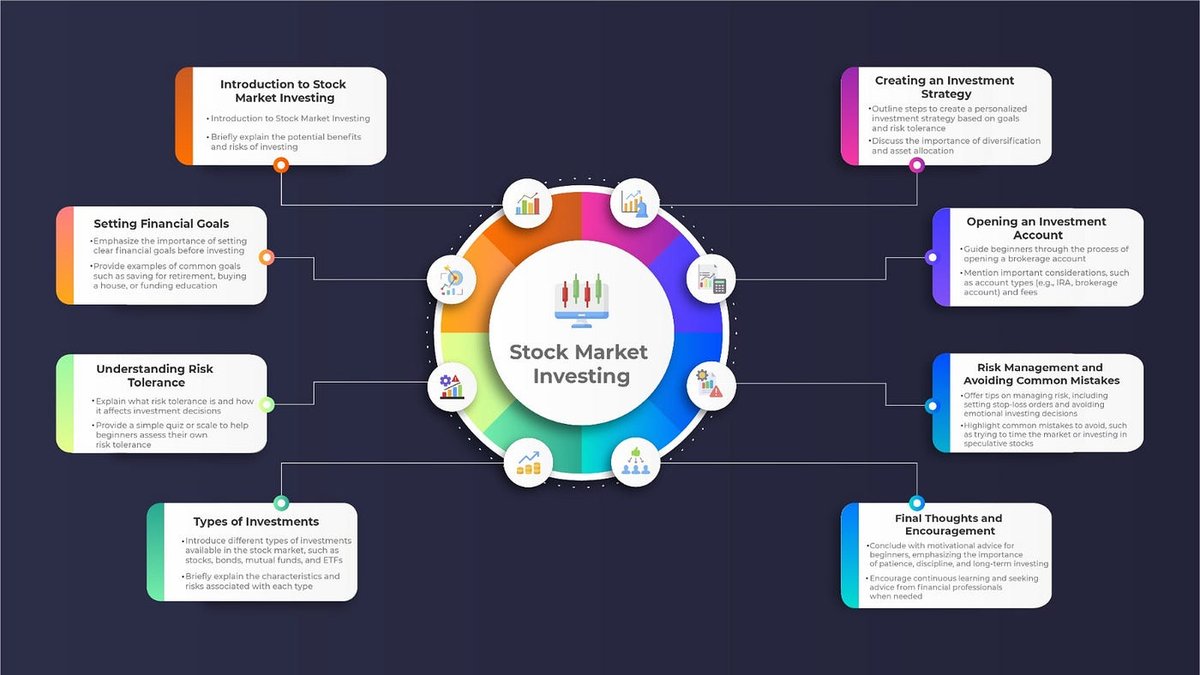
The world of finance often feels like a secret language, full of jargon and complex instruments. But at its heart, much of what drives our global economy boils down to different types of financial securities. Understanding these foundational building blocks – what they are, how they work, and their inherent risks and rewards – is the first crucial step for anyone looking to invest wisely, manage finances, or simply grasp how companies and governments fund their ambitions.
This guide isn't about telling you what to buy, but empowering you to understand the what and why behind your potential choices. Consider this your plain-language tour through the financial landscape, exploring different types of securities that form the backbone of modern markets.
At a Glance: Key Takeaways on Securities
- Securities are financial instruments representing ownership (equity), a loan (debt), or a contractual right (derivatives).
- Legally, a security is often defined by the "Howey Test" in the U.S.: an investment of money in a common enterprise with an expectation of profit from the efforts of others.
- Three main categories: Equity (ownership), Debt (lending), and Derivatives (value from an underlying asset). Investment funds are also securities.
- Equity offers growth potential but higher risk (e.g., common stock, preferred stock).
- Debt provides stable income and lower risk (e.g., bonds, commercial paper).
- Derivatives are complex tools for hedging or speculation, carrying high leverage (e.g., options, futures, swaps).
- Securities trade in primary markets (new issues) and secondary markets (investor-to-investor).
- Regulation ensures transparency and investor protection.
- Choosing the right security depends on your risk tolerance, financial goals, and investment horizon.
What Exactly Is a Security? Defining Your Financial Claim
Before we dive into categories, let's establish a common ground. At its core, a financial security is a fungible, negotiable financial instrument that represents monetary value. Think of it as a formal claim. It might be a claim on a company’s assets or earnings, or a contractual right to a specified future payment. When you buy a security, you're acquiring a piece of that claim.
In the U.S., the legal definition of a security is particularly important, especially for regulatory bodies like the Securities and Exchange Commission (SEC). An instrument is generally considered an "investment contract" – and therefore a security – if it meets the four prongs of the Howey Test:
- An investment of money: You're putting capital in.
- In a common enterprise: Your investment is pooled with others, and its success is linked to the group.
- With an expectation of profit: You anticipate a return on your investment.
- Derived primarily from the efforts of others: Your profit isn't from your own work, but from the management or promoters of the enterprise.
This definition ensures that instruments meeting these conditions are subject to strict disclosure and registration requirements under laws like the Securities Act of 1933, designed to protect investors and maintain fair markets.
Broadly speaking, securities fall into three primary classes: equity instruments, debt instruments, and derivative instruments. We’ll also cover investment funds, which are themselves considered securities.
The Big Three (Plus One): Your Core Security Classes
Each type of security offers a unique balance of risk, reward, and purpose, catering to different investor needs and market conditions.
1. Equity Securities: Owning a Piece of the Pie
When you invest in equity securities, you're buying an ownership stake in a corporation. This makes you a part-owner, with rights and responsibilities that come with it. The allure of equities lies in their potential for growth, as successful companies can see their share values rise significantly over time. However, this growth potential comes with inherent volatility and risk.
Common Stock: The Classic Ownership Stake
This is likely what most people think of when they hear "stock." Common stock represents fractional ownership in a company and typically grants you voting rights – allowing you to influence corporate decisions by electing the board of directors.
- Returns: You profit primarily through capital appreciation (when the stock price increases) and potentially discretionary dividends (a portion of the company's earnings paid out to shareholders, though not guaranteed).
- Risk: Common stockholders are at the bottom of the priority ladder if a company faces liquidation or bankruptcy. This means creditors and preferred stockholders get paid first, potentially leaving common stockholders with nothing.
- Liquidity: Most common stocks of publicly traded companies are highly liquid, meaning they can be easily bought and sold on exchanges.
Preferred Stock: A Hybrid with a Twist
Preferred stock is often called a hybrid security because it blends features of both equity and debt. While it represents ownership, its characteristics lean towards providing more stable income, similar to a bond.
- No Voting Rights (Typically): Unlike common stockholders, preferred stockholders usually don't have voting rights.
- Fixed Dividends: The key feature of preferred stock is that it typically pays a fixed dividend, similar to bond interest. These dividends take precedence over common stock dividends, meaning preferred stockholders get paid first.
- Liquidation Priority: In the event of liquidation, preferred stockholders have priority over common stockholders but are still subordinate to debt holders.
- Less Volatility: Due to their fixed dividends and higher liquidation priority, preferred stocks tend to be less volatile than common stocks, offering a more predictable income stream.
- Growth Potential: Capital appreciation is generally more limited compared to common stock.
Why Choose Equity? If you're looking for long-term growth potential and are comfortable with market volatility, equities can be a powerful wealth-building tool. They offer the chance to participate directly in a company's success.
2. Debt Securities: Lending Your Money for a Return
Debt securities, often called fixed-income securities, are essentially formal loans. When you buy a debt security, you become a creditor to the issuing entity (a company, government, or municipality). In return for your loan, the issuer promises to pay you a predictable stream of interest payments (known as the "coupon") and repay the original amount borrowed (the "principal" or "face value") on a specified maturity date.
Interest payments on debt securities are legally required before any dividends can be paid to equity holders, making them generally lower risk and more stable than equities.
Corporate Bonds: Funding Business Growth
Issued by companies, corporate bonds are a way for corporations to borrow money directly from investors to fund operations, expansion, or refinance existing debt.
- Maturity: These are typically long-term loans, often maturing between one and 30 years.
- Risk & Yield: Corporate bonds are broadly categorized based on their creditworthiness:
- Investment-grade bonds: Issued by financially strong companies, carrying lower risk and, consequently, lower yields (interest rates).
- High-yield (or "junk") bonds: Issued by companies with lower credit ratings, implying higher risk of default. To compensate investors for this added risk, they offer higher yields.
Government Bonds: The Bedrock of Fixed Income
Governments at all levels issue bonds to finance public projects, services, or national debt. They are often considered among the safest investments, especially those issued by stable national governments.
- Treasury Securities (National Government Bonds): Issued by national governments (like the U.S. Treasury), these are renowned for their low risk (as they're backed by the "full faith and credit" of the government) and high liquidity. They are often used as benchmarks for other interest rates.
- Treasury Bills (T-Bills): Short-term, maturities up to one year.
- Treasury Notes (T-Notes): Intermediate-term, maturities from two to ten years.
- Treasury Bonds (T-Bonds): Long-term, maturities typically 20 to 30 years.
- Municipal Bonds ("Munis"): Issued by local authorities (states, cities, counties) to finance public works like schools, roads, and utilities. A significant appeal of municipal bonds is that their interest income is often exempt from federal income tax, and sometimes state and local taxes, making them attractive to high-income investors.
Commercial Paper (CP): The Short-Term Corporate IOU
Commercial paper is a short-term, unsecured promissory note issued by large, financially stable corporations. It's used for very short-term funding needs, like managing payroll or inventory.
- Maturity: Typically matures within 270 days (to avoid SEC registration requirements), often much shorter.
- Unsecured: Not backed by specific collateral, relying solely on the issuer's creditworthiness.
- Credit Rating: Because it's unsecured and short-term, commercial paper usually requires a high credit rating from the issuing corporation to be marketable.
Evaluating Debt Securities: When considering debt, investors look at several factors: - Credit Rating: An assessment of the issuer's ability to repay (e.g., from Moody's, S&P, Fitch).
- Maturity Period: How long your money is tied up.
- Covenants: Clauses in the bond agreement protecting the lender.
- Security Interest: Whether the bond is backed by specific assets.
- Market Conditions: Prevailing interest rates and economic outlook.
Why Choose Debt? If your priority is capital preservation, predictable income, and lower volatility, debt securities offer a more stable foundation for your portfolio. They are a common choice for retirees or those saving for specific shorter-term goals.
3. Derivative Instruments: Contracts Based on Something Else
Derivative instruments are perhaps the most complex type of security. Their name, "derivative," tells you their core characteristic: their value is derived from an underlying asset, index, or benchmark. This underlying "thing" could be a stock, bond, commodity (like oil or gold), currency, or even an interest rate.
Derivatives are primarily used for two main purposes: hedging risk exposure (reducing potential losses from price fluctuations) or speculation (betting on future price movements to make a profit). They often involve high leverage, meaning a small initial investment can control a large underlying value, leading to the possibility of substantial gains or losses.
Options: The Right, Not the Obligation
An option contract gives the holder the right, but not the obligation, to buy or sell an underlying asset at a predetermined price (the "strike price") by a specified date (the "expiration date").
- Call Option: Grants the right to buy the underlying asset. Investors buy calls if they expect the asset's price to rise.
- Put Option: Grants the right to sell the underlying asset. Investors buy puts if they expect the asset's price to fall.
- Premium: To acquire this right, the option buyer pays a fee, called a premium, to the option seller.
Futures Contracts: The Binding Agreement
Futures contracts are standardized agreements traded on an exchange that legally oblige both parties to execute a transaction at a set price and date in the future.
- Obligation: Unlike options, both the buyer and seller of a futures contract are obligated to fulfill their side of the agreement – either to buy or to sell the underlying asset.
- Standardized: Futures contracts have standardized quantities, qualities, and delivery dates, making them highly liquid and transparent.
- Examples: Common futures include contracts on crude oil, gold, agricultural products, stock indices, and currencies.
Swaps: Custom Exchanges of Cash Flows
Swaps are customized Over-The-Counter (OTC) contracts where two parties agree to exchange future cash flows based on different underlying assets or rates. They are highly flexible but also carry counterparty risk, as they are not typically cleared through an exchange.
- Interest Rate Swaps: The most common type, where parties exchange fixed-rate interest payments for floating-rate payments (or vice versa) on a notional principal amount.
- Currency Swaps: Involve exchanging principal and/or interest payments in different currencies.
- Credit Default Swaps (CDS): A form of insurance against a bond default.
Why Use Derivatives? Derivatives are powerful tools for sophisticated investors, institutions, and corporations. They can manage risk, exploit market inefficiencies, or speculate on future price movements with high leverage. However, their complexity and leverage potential mean they require a clear understanding of contract terms and market dynamics, as the possibility of substantial losses is real.
4. Investment Funds: Pooling Resources for Diversification
While the previously discussed instruments are direct claims on companies or governments, investment funds are collective investment vehicles that pool resources from multiple investors. These funds then use that collective capital to purchase a diversified portfolio of other securities – like stocks, bonds, or other assets – according to a stated investment objective.
Because these funds themselves are instruments that represent an investment in an enterprise with an expectation of profit from the efforts of others, they are also considered securities and are subject to disclosure, registration, and compliance requirements.
- Mutual Funds: Professionally managed portfolios that pool money from many investors to invest in a diverse array of securities. They are bought and sold at their Net Asset Value (NAV) once a day.
- Exchange-Traded Funds (ETFs): Similar to mutual funds in their pooled investment approach, but they trade like individual stocks on exchanges throughout the day. They often track an index (like the S&P 500) and typically have lower expense ratios than actively managed mutual funds.
- Closed-End Funds: Also pool investor money and trade on exchanges. Unlike ETFs, they issue a fixed number of shares in an initial public offering (IPO) and then trade based on supply and demand, often at a premium or discount to their NAV.
Why Invest in Funds? Investment funds offer several key advantages, including diversification (spreading risk across many assets), professional management (for actively managed funds), and accessibility to a broad range of securities with smaller capital outlays. They simplify the investment process for many, making portfolio construction more manageable.
Where Securities Trade: Primary vs. Secondary Markets
Understanding what securities are is only half the picture; you also need to know where they're bought and sold. Financial markets are the arenas where these transactions take place, broadly divided into two crucial categories:
The Primary Market: Where New Securities Are Born
The primary market is where new securities are first created and sold by the issuing entity (a company or government) to raise capital. When a company decides to go public, for instance, its initial public offering (IPO) happens here.
- Purpose: The issuing entity directly receives the cash proceeds from these sales. This capital is then used for business expansion, funding government projects, or other strategic initiatives.
- Examples: IPOs, new corporate bond issuances, government bond auctions.
- Players: Investment banks often act as underwriters, facilitating the sale of these new securities to institutional investors and, eventually, to the public.
The Secondary Market: The Marketplace for Existing Securities
Once a security has been issued in the primary market, it can then be traded among investors in the secondary market. This is the market most individual investors are familiar with.
- Purpose: The secondary market does not involve the issuing company directly receiving funds. Instead, it provides liquidity for investors, allowing them to buy and sell previously issued securities. It also helps establish market prices based on supply and demand.
- Examples: The New York Stock Exchange (NYSE), NASDAQ, and various bond markets are all secondary markets.
- Trading: Transactions occur on centralized exchanges (like the NYSE) and decentralized Over-The-Counter (OTC) markets, where brokers and dealers negotiate directly.
Without a robust secondary market, investors would be hesitant to buy securities in the primary market, knowing they might not be able to sell them later. Thus, both markets are vital for the efficient functioning of capital markets.
The Watchdogs: Understanding Securities Regulation
The vast and complex world of securities doesn't operate in a free-for-all. Robust legal frameworks and regulatory bodies are in place to promote transparency, ensure fairness, and protect investors from fraud and manipulation. In the U.S., the Securities Act of 1933 and the Securities Exchange Act of 1934 are foundational, with the Securities and Exchange Commission (SEC) acting as the primary regulatory body.
Regulations typically involve:
- Registration Requirements: Issuers must register new securities with the SEC, providing detailed information about the company, its financials, and the offering.
- Reporting and Disclosure: Publicly traded companies must file regular reports (e.g., quarterly and annual reports) to keep investors informed about their financial health and operations.
- Anti-Fraud Provisions: Laws prohibit misrepresentations, insider trading, and other deceptive practices.
- Classification of Securities: The legal classification of an instrument as a "security" (via the Howey Test, for example) determines whether it falls under the jurisdiction of these regulations.
These regulations are crucial because they build trust in the markets, encouraging participation and facilitating the transfer of capital that fuels economic growth. For professionals looking to deepen their expertise in this highly regulated landscape and navigate its intricacies, you might wonder Is a security certification worth it?. Understanding the regulatory environment isn't just about compliance; it's about making informed decisions within a defined framework.
Making Smart Choices: How to Evaluate Securities
With so many types of securities available, how do you decide what's right for you? It boils down to aligning your investment choices with your personal financial goals, time horizon, and, most importantly, your risk tolerance.
Here are key criteria to consider when evaluating different securities:
- Risk Level: Every security carries some degree of risk.
- Market Risk: The risk that the overall market will decline, impacting even fundamentally sound investments.
- Credit Risk (Default Risk): The risk that the issuer of a debt security will be unable to make interest payments or repay the principal. This is why credit ratings are so important for bonds.
- Interest Rate Risk: For fixed-income securities, rising interest rates can make existing bonds (with lower fixed rates) less attractive, causing their market value to fall.
- Liquidity Risk: The risk that you may not be able to sell a security quickly without significantly impacting its price, especially for less common or thinly traded instruments.
- Inflation Risk: The risk that inflation erodes the purchasing power of your investment returns.
- Concentration Risk: Having too much of your portfolio in one type of security, industry, or company.
- Expected Return Rate: What kind of return do you anticipate?
- Growth (Capital Appreciation): Primarily sought with equities, where the stock price rises.
- Income (Interest/Dividends): Primarily sought with debt securities (interest) and preferred stocks (dividends), or common stocks that pay consistent dividends.
- Remember, higher potential returns typically come with higher risk.
- Liquidity: How easily and quickly can you convert the security into cash without a significant loss in value?
- Highly liquid assets (e.g., major exchange-traded stocks, Treasury bonds) are easy to sell.
- Less liquid assets (e.g., some private equity, obscure bonds) might take longer to sell or require a discount.
- Maturity Period (for Debt): For debt instruments, how long until the principal is repaid?
- Short-term securities offer more flexibility but lower yields.
- Long-term securities offer potentially higher yields but lock up your capital for longer and are more sensitive to interest rate changes.
- Diversification: How does this security fit into your overall portfolio? A well-diversified portfolio balances different asset classes, industries, and geographies to mitigate specific risks. Investment funds are an excellent way to achieve immediate diversification.
- Your Financial Goals and Time Horizon:
- Short-term goals (1-3 years): Prioritize stability and liquidity, often leaning towards cash equivalents or short-term debt.
- Mid-term goals (3-10 years): A balanced approach with a mix of debt and equity might be suitable.
- Long-term goals (10+ years): Can typically afford to take on more equity risk for higher growth potential.
By carefully evaluating these factors, you can build a portfolio that aligns with your individual circumstances and helps you achieve your financial aspirations.
Common Questions & Misconceptions About Securities
Navigating the world of investments often brings up common queries. Let's tackle a few:
"Are all investments considered securities?"
No. While many popular investments are securities, not everything falls under the legal definition. For example, directly owning physical real estate, starting your own sole proprietorship business, or buying precious metals in physical form are typically not considered securities because they generally don't meet the "efforts of others" prong of the Howey Test. Your profit isn't primarily derived from someone else's management of a common enterprise.
"Is cryptocurrency a security?"
This is a hot and often debated topic. The answer is nuanced and depends on the specific cryptocurrency and how it's offered. Regulators often apply the Howey Test to new digital assets. If a cryptocurrency or token is offered as an investment of money in a common enterprise with an expectation of profit derived from the efforts of others (e.g., the development team or promoters), it could be deemed a security. If it functions purely as a medium of exchange or utility within a fully decentralized network, it might not be. The SEC has taken the position that many initial coin offerings (ICOs) and some cryptocurrencies are indeed securities.
"Can I lose money in 'safe' securities like government bonds?"
Yes, even relatively "safe" securities carry risks. While U.S. Treasury bonds are considered free of credit (default) risk, they are not free of interest rate risk. If you buy a bond and interest rates rise, the market value of your existing bond (which pays a lower, fixed coupon) will likely fall if you need to sell it before maturity. You could also lose purchasing power due to inflation risk if your bond's interest payments don't keep pace with rising prices. "Safe" doesn't mean "risk-free" in terms of market value or purchasing power, only typically in terms of default.
Your Next Steps in the Securities Market
Understanding the different types of securities is more than just academic knowledge; it's a foundational skill for anyone engaging with financial markets. Whether you're planning for retirement, saving for a down payment, or simply aiming to grow your wealth, knowing the distinctions between equity, debt, and derivatives, and how investment funds work, is crucial for making informed decisions.
Now that you have a clearer picture, here are some actionable next steps:
- Assess Your Goals: Clearly define what you're saving or investing for, and over what time frame. This will heavily influence the types of securities that are appropriate.
- Determine Your Risk Tolerance: Be honest with yourself about how much volatility you can stomach. This is perhaps the most critical factor in choosing investments.
- Start Small and Learn More: You don't need a huge sum to begin. Consider low-cost investment funds like ETFs as a diversified entry point.
- Consult a Professional: A qualified financial advisor can help you create a personalized investment plan that aligns with your goals and risk profile, guiding you through the complexities of the securities market.
- Keep Learning: The financial world is dynamic. Stay informed about market trends, economic indicators, and new investment products. Financial literacy is an ongoing journey.
By taking these steps, you'll move from merely observing the financial markets to confidently participating in them, armed with the knowledge to make choices that serve your future.